A Note on the Method and Materials of the Mnemosyne Panels
On: L’Atlante delle immagini (Carocci, Roma 2026)
Monica Centanni e Seminario Mnemosyne
Abstract | Versione italiana originale
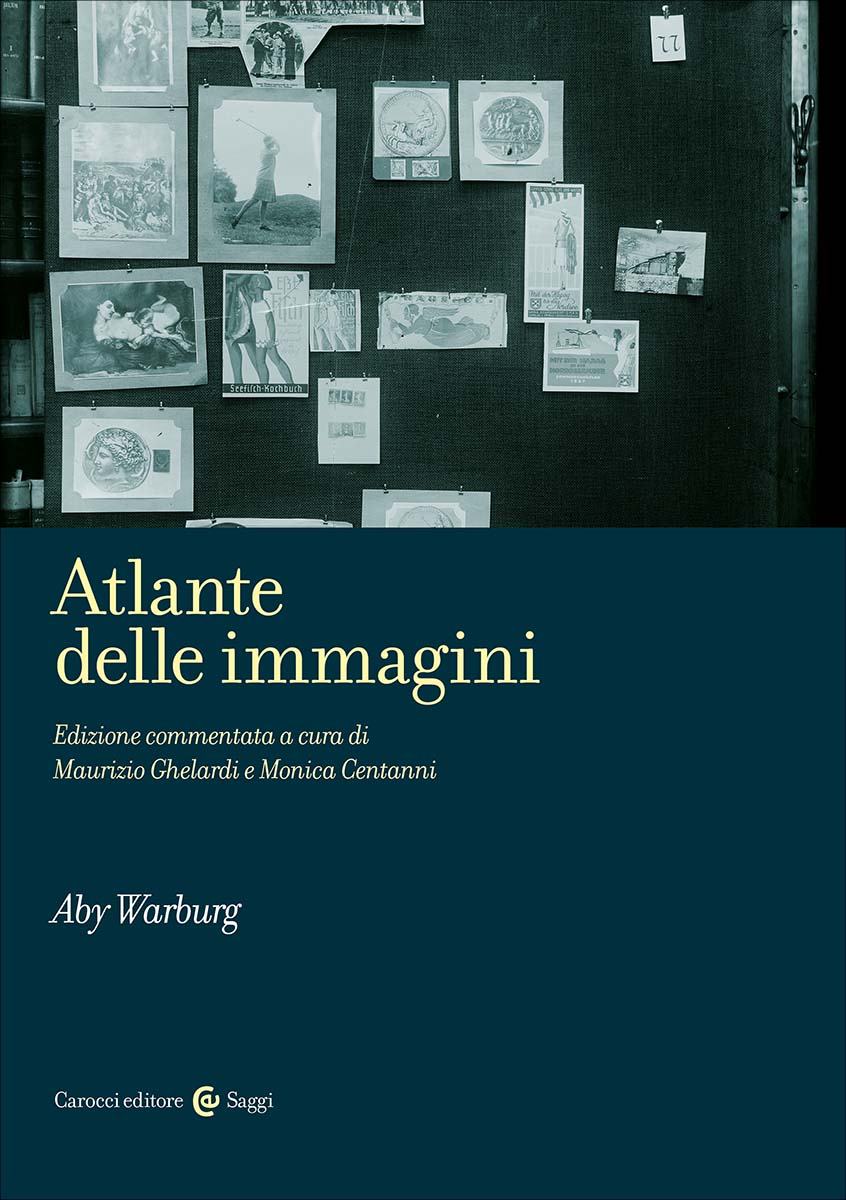
A. Warburg, L’Atlante delle immagini, a cura di M. Ghelardi, M. Centanni (Carocci, Roma 2026).
Indice
Prolegomeni
Presentazione, di Monica Centanni e Maurizio Ghelardi
Aby Warburg: dalla parola all’immagine, di Maurizio Ghelardi
Atlante Mnemosyne: il tema e i contenuti, di Monica Centanni
Testi sull’Atlante
Introduzione a Mnemosyne: l’Atlante delle immagini, Aby Warburg, traduzione di Maurizio Ghelardi
Lettera alla casa editrice Teubner (1930), di Fritz Saxl, traduzione di Maurizio Ghelardi
Atlante Mnemosyne
Nota sul metodo e sui materiali delle Tavole di Mnemosyne, a cura di Monica Centanni e del Seminario Mnemosyne
Percorso α (Tavole A, B, C)
Coordinate della memoria
Percorso I (Tavole 1-3)
Astrologia e mitologia. Proiezioni del cosmo: Babilonia, Atene, Alessandria, Roma
Percorso II (Tavole 4-8)
Preconiazioni dell’Antico. Estasi e malinconia; Madre della vita e della morte;
Pathos del sacrificio; Pathos della Vittoria; Pathos dell’ascesa e della caduta
Percorso III (Tavole 20-27)
Migrazione degli antichi dèi. Peregrinazioni e mascheramenti delle antiche divinità
tra Oriente e Occidente (Baghdad, Toledo, Padova, Rimini, Ferrara, XIII-XV secolo)
Percorso IV (Tavole 28/29-35)
Veicoli della tradizione. Tornei, feste, arazzi, fiabe mitologiche. Scambi tra Nord e Sud
(primo Rinascimento, Firenze, le Fiandre, XV-XVI secolo)
Percorso V (Tavole 36-41a)
Irruzione dell’Antico. Feste, vita di corte, giochi popolari, mitiche allegorie, pathos
dionisiaco (XV-XVI secolo)
Percorso VI (Tavole 42-48)
Reincarnazioni dell’Antico. Figure del compianto, Mercanti e Fortuna,
Angeli e Vittoria, Ninfe e Cacciatrici di teste (Firenze, XV secolo)
Percorso VII (Tavole 49-52)
Mantegna e l’Antico. Controllo, distanza e inversione del pathos
Percorso VIII (Tavole 53-56)
Dalle Muse a Manet. Ascesa e caduta degli dèi (Roma-Parigi, XVI-XIX secolo)
Percorso IX (Tavole 57-59)
Dürer e l’Antico. Migrazioni al Nord
Percorso X (Tavole 60, 61/64)
L’era di Nettuno. Mito e celebrazione del potere tra corti italiane
e monarchie europee (XVI-XVII secolo)
Percorso XI (Tavole 70-76)
Arte ufficiale e pathos barocco. Drammatizzazione del mito: dalla scena del ratto
al teatro anatomico (Rembrandt, Rubens)
Percorso XII (Tavole 77-79)
Attualità della Memoria. Sublimazione del pathos dell’Antico: sport, Chiesa,
Stato e potere
Bibliografia
Since 2000, the Seminario Mnemosyne has studied the work of Aby Warburg, with particular attention to his Mnemosyne Atlas. The group prepared synopses of the individual panels for the 2004 Venice exhibition (Venezia, Fondazione Ugo e Olga Levi, 20 March-2 April 2004) and developed this work further in the digital Atlas that Engramma began publishing in 2012. A new important chapter of this research is the volume Atlante delle immagini (Roma, Carocci, 2026), edited by Maurizio Ghelardi and Monica Centanni. In their introductory note, Centanni and the Seminario Mnemosyne present the commentaries on the sixty-three panels, grouped into thirteen routes through the Atlas. They explain why each historical photograph is reproduced with a colour reconstruction of the panel on the reverse. They outline the methodological choices that shaped the edition, from the presentation of the panels to the identification of individual images. The Italian note appears here alongside its first English translation.
A Note on the Method and Materials of the Mnemosyne Panels
A method for the commentary on the panels
As far as can be established from its final stage of development, the Atlas consists of panels intended to be reproduced in large format, each assembling a montage of images of different kinds: photographs of paintings, miniatures, prints, book pages, maps and playing cards; reproductions and drawings of archaeological finds from ancient Near Eastern, Greek and Roman cultures; excerpts from articles printed in scholarly journals; and advertising labels, postage stamps and newspaper cuttings as evidence of contemporary culture. The primary aim of the commentary entries is to describe the contents and internal architecture of each panel.
Preparing a commentary and a critical reading of each of the 63 panels that make up the Mnemosyne Atlas required a journey through the research themes that Aby Warburg explored throughout his life, and which find their most fully developed expression in Mnemosyne. This procedure also seeks to reactivate, as far as possible, the project for an atlas in book form that its creator envisaged as comprising several volumes: one devoted to the panels, and one or two to the commentaries.
The undertaking required, first of all, a framework for the commentary on individual panels that would be clear and consistent, yet adaptable to the particular principles governing each of the 63 panels. The method we found most useful for finding our way into the architecture of the Atlas is essentially inductive.
The panels have been analysed by treating each image as an argumentative syntagm, contributing to a discourse organised through montage and illuminated by Warburg’s writings, whose themes often coincide with, or at least converge upon, those presented in the panels.
It should be remembered that the surviving photographic documentation is only a provisional mock-up. Warburg left no precise instructions concerning the layout of the volume or the position of the commentaries in relation to the panels; the sequence and argumentative structure proposed in the commentary entries are therefore wholly inductive, making no claim to fidelity to his original intention. Every panel has its own physical presence (on the original dimensions of the preparatory panels, see Calandra di Roccolino 2021) and each of its constituent elements has material properties and measurable dimensions that require investigation, always allowing for the uncertainties surrounding the availability and use of images at the time when the Atlas was conceived and planned. Differences of scale between the photographic reproduction and the original, the cropping of an image, the enlargement of a detail, the repetition of the same subject, or variations on the same theme in different geographical areas are essential to the visual argument. They reveal a precise working method made possible by the new technologies of photographic reproduction available in the early decades of the twentieth century.
Within this complex apparatus, distinguishing between deliberate choice and mere chance remains a crucial problem, to be addressed panel by panel, image by image. This is both a test and a wager, in which every effort is directed towards bringing new aspects of the works displayed to light and, by extending the perspective beyond the individual panel, revealing new paths through the labyrinth of Mnemosyne.
We considered it necessary to make our method of reading explicit at every stage, so that it could be tested and challenged at every turn of the argument. Entering, and somehow leaving, the labyrinth makes sense provided that the partial nature of the reading is acknowledged, and that the possibility of entering and leaving through other doors remains open. Every commentary adopts an explicit interpretative perspective, deliberately open to being understood, but also overturned, corrected or recalibrated. For this reason, we account step by step for the choices made, none of which has been taken for granted.
Routes
While chance plays a substantial part in the selection of individual images in the panels of the Atlas, the same cannot be said of its supporting framework. The structure of the Atlas is firm yet flexible, and clearly legible despite being far from linear. The sequence of panels presents the core of a conceptual process that also follows a chronological development, from protohistory to the immediate present. Beginning with ancient objects associated with divinatory practices and astrology (Panels 1, 2, 3), it moves on to the Greek and Roman examples that constitute the matrices, the “pre-coined forms of Antiquity” (Panels 4-8). Thereafter, throughout the Atlas (Panels 20-79), attention shifts not so much, and certainly not exclusively, to major works of art, but also, and above all, to the smaller objects of material culture: the Realien, understood as “messengers” (Settis 1981, XIX), vehicles of tradition and tangible signs of the varied and unpredictable epiphanies of antiquity.
In this edition, the panels of the Atlas are grouped into thematic routes. The articulation made visible in the organisation of the commentary is grounded in one of the records Aby Warburg left concerning Mnemosyne: a series of notes dated 19 October 1929 and headed Flüchtige Notizen (“jottings”), which provides his final and most precise indication of the structure of the Atlas (WIA III 102.6; Zanon 2025, 267-283).
The panels are numbered sequentially from 1 to 79, yet total only 63, since the numbering contains gaps, combinations and duplications. The 63 surviving panels are grouped into thirteen thematic sections. In this volume, the commentary entries follow the division into thematic itineraries envisaged by Warburg:
• Route α (Panels A, B, C). Coordinates of memory;
• Route I (Panels 1, 2, 3). Astrology and mythology. Projections of the cosmos: Babylon, Athens, Alexandria, Rome;
• Route II (Panels 4, 5, 6, 7, 8). Pre-coined forms of Antiquity. Ecstasy and melancholy; Mother of life and death; Pathos of sacrifice; Pathos of Victory; Pathos of ascent and fall;
• Route III (Panels 20, 21, 22, 23, 23a, 24, 25, 26, 27). Migration of the ancient gods. Wanderings and disguises of the ancient deities between East and West (Baghdad, Toledo, Padua, Rimini, Ferrara, thirteenth–fifteenth centuries);
• Route IV (Panels 28/29, 30, 31, 32, 33, 34, 35). Vehicles of tradition. Tournaments, festivals, tapestries, mythological tales. Exchanges between North and South (early Renaissance, Florence, Flanders, fifteenth–sixteenth centuries);
• Route V (Panels 36, 37, 38, 39, 40, 41, 41a). The irruption of Antiquity. Festivals, court life, popular games, mythological allegories, Dionysian pathos (fifteenth–sixteenth centuries);
• Route VI (Panels 42, 43, 44, 45, 46, 47, 48). Reincarnations of Antiquity. Figures of lamentation, Merchants and Fortune, Angels and Victory, Nymphs and Head-huntresses (Florence, fifteenth century);
• Route VII (Panels 49, 50/51, 52). Mantegna and Antiquity. Control, distance and the inversion of pathos;
• Route VIII (Panels 53, 54, 55, 56). From the Muses to Manet. The rise and fall of the gods (Rome–Paris, sixteenth–nineteenth centuries);
• Route IX (Panels 57, 58, 59). Dürer and Antiquity. Migrations to the North;
• Route X (Panels 60, 61/64). The age of Neptune. Myth and the celebration of power between Italian courts and European monarchies (sixteenth–seventeenth centuries);
• Route XI (Panels 70, 71, 72, 73, 74, 75, 76). Official art and Baroque pathos. The dramatisation of myth: from the abduction scene to the anatomical theatre (Rembrandt, Rubens);
• Route XII (Panels 77, 78, 79). Memory in the present. Sublimation of the pathos of Antiquity: sport, Church, State and power.
Two minor inconsistencies in Warburg’s notes should be mentioned. We have resolved them by making two small changes to the division, in keeping with the indications that can be drawn from the notes themselves:
1. The first eight panels, which Warburg places in a single section, have been divided into two distinct thematic routes: Route I, devoted to astrological images (Panels 1, 2, 3), and Route II, devoted to models from Antiquity (Panels 4, 5, 6, 7, 8). Warburg himself groups Panels 4-8 under the heading Antike Vorprägungen (“pre-coined forms of Antiquity”), which precisely defines the contents of these five panels;
2. In the notes cited above, Warburg assigns Panel 77, which brings together contemporary images, to the preceding route devoted to Rembrandt and the Northern Baroque (XI: Panels 70-77). This is evidently an oversight, since the contents of Panel 77 suggest that it belongs with the final group devoted to the contemporary world (XII: Panels 77-79).
The result is thirteen routes of interpretation (α + I–XII), whose arrangement provides a course through the Atlas, following a progression that moves, non-linearly, in chronological, geographical and thematic terms from protohistory to the present. From the first group (α), which establishes the methodological, historical and philosophical coordinates of the Atlas, and through the series of archaeological panels (II), which serve as an inventory of the figurative and conceptual motifs to be drawn from archaeological models, we proceed in stages to Routes III–IV, devoted to the “disguise” of themes from Antiquity in a medieval, chivalric idiom, between Europe and the Italian courts. Routes V–VIII then take us through the themes and figures of an Italian Renaissance that extends as far as Manet, before we move on to the Northern Renaissance in group IX, the new horizons of modernity (Route X), and the distinctive rebirth of Antiquity in Rembrandt (Route XI), finally reaching the immediate present in the panels of Route XII.
Commentary entries
The 63 panels are presented in the order established by the numbering recorded in the photographic campaign of 1929, including the gaps, duplications and combinations documented in the final phase of work on the Atlas. There is a gap in the numbering between Panel 8 (the last in Route II, which includes the archaeological models) and Panel 20 (the first in Route III, devoted to the arrival of mythological figures in the great astrological cycles of the early Renaissance). Another gap occurs between Panel 61/64 (which closes Route X, devoted to the “age of Neptune” and the iconography of power in European monarchies) and Panel 70 (which opens Route XI, centred on Rembrandt). The numbering of Panel 23 (devoted to the Hall of the Months in Padua) branches into Panel 23a (which presents material from books of lots and manuals of divination). Panel 41 (which presents figures expressing the pathos of annihilation) is followed by Panel 41a (centred on the impact of the discovery of the Vatican Laocoön). The numbers 28/29, 50/51 and 61/64, each attached to a single panel, evidently reflect either the combination of material previously distributed across different panels, or an intention, which remained undeveloped, to explore a theme over several panels.
Gaps, duplications and combinations all testify to the provisional state in which the Atlas has come down to us, and it seems reasonable to suppose that the numbering would have been regularised in the final version.
Each entry comprises a title and a photographic reproduction of the panel in its 1929 version; a reconstruction of the panel with images against a white background, at the highest available resolution; the corresponding captions; and a critical reading of the panel, accompanied by a short bibliography specific to it.
The title introducing each panel is the outcome of the collective work undertaken for this edition of the Atlas. It derives, though only indirectly, from the indications left by Warburg and from the notes Gertrud Bing would subsequently compile, around 1940, in preparation for a posthumous publication of the Mnemosyne Atlas (Bing [1940] 2024). Its purpose is to give the reader an initial orientation to the panel’s contents. In devising the titles, we sought to combine clarity about the contents with suggestiveness about the themes. As a result, some entries have explanatory titles, at times modelled almost word for word on Warburg’s scholarly work, such as Panel 3, La fede negli astri: da Atene ad Alessandria (“Belief in the Stars: From Athens to Alexandria”), or Panel 57, Dürer e l’Antichità italiana (“Dürer and Italian Antiquity”). Other entries have more allusive titles, whose meaning becomes clear in the course of the commentary, as with Il cosmo a portata di mano (“The Cosmos within Reach”) for Panel 50/51, or Manet e il picnic degli dèi (“Manet and the Picnic of the Gods”) for Panel 55.
The commentary on each panel is conceived as a hermeneutic apparatus that focuses on individual images, clarifies their iconographic and material details, and places them within the broader historical and cultural constellation that the panel itself sometimes defines precisely and sometimes suggests. Close analysis of individual images was, for us, the most appropriate and the first key to understanding not only the significance of a particular inclusion, but also the theme around which the panel is constructed. Yet the ultimate aim of the commentary entries remains to identify the meaning of the overall argument by analysing juxtapositions and tensions, highlighting the points where the connections are most polished and perspicuous and, perhaps above all, those where the seams are rougher and the development of the discourse per figuras is harder to follow.
Each entry thus proposes a reading that interweaves its specific interpretation with quotations from and precise references to Warburg’s writings, while bearing in mind the status quaestionis and the state of scholarly research when the Atlas was being assembled. One example is the front of a marriage cassone showing a tournament in Piazza Santa Croce in Florence [28/29.1]. The commentary points out that in Warburg’s day the chivalric ludus was thought to have been staged in 1439 on the occasion of the Council for the union of the two Churches. More recently, however, the same tournament has been linked to the spectacles organised in honour of Pope Pius II and Galeazzo Maria Sforza, who passed through the city in April 1459.
Images
This edition consists of 63 fascicles, each opening with a page bearing the panel number and a reproduction of the panel in the final version of the Atlas photographed before the material and the entire Warburg Library were moved from Hamburg to London.
On the reverse is a full-page reconstruction of the panel in colour. The decision to replace the black background with a white one responds to the requirements of print reproduction, with the aim of ensuring better print quality and greater legibility for every image. The choice of a white background is therefore dictated solely by technical and functional considerations, and does not imply the removal of the semantic significance of the dark cloth to which the images on the Mnemosyne panels are pinned. The black background can indeed be read as the basso continuo of history, from which images resurface as emergences of meaning, and should not be regarded solely as a material feature of the Atlas. Black also has a philosophical significance, as the physical embodiment of that “space for thought” (Denkraum) that gives rhythm to the necessary alternation between dark voids and the fullness of the image, and conveys, through the dense chromatic quality of the spacing, the deep abyss of reflection (Centanni 2010; Sacco 2015; Sacco 2023; Ghelardi 2016; Ghelardi 2022; Cirlot [2017] 2018; Nicastro 2022).
The images assembled on the panels against a white background do not reproduce the photographs of 1929, but have been obtained from new photographic reproductions at the highest resolution currently available. This operation, only apparently at odds with philological fidelity, remains true to Warburg’s intentions: as is well documented, he sought the best reproductions available at the time for his Atlas. In September 1929, for example, he requested the purchase of an innovative photographic enlarger specifically for the work on Mnemosyne (GS Tagebuch, 535). Precisely because present-day reproduction and printing techniques make colour readily available, we judged that using the images’ original colours would correspond more closely to Warburg’s desire to draw on the best available reproductions, in colour wherever possible. Nor should it be forgotten that a significant proportion of the elements originally mounted on the panels were already in colour: reproductions of prints, postage stamps, excerpts from illustrated books and chromolithographs. Restoring this chromatic variety means preserving the qualitative and material heterogeneity of the elements selected by Warburg, and enabling the reader to grasp their differences with an immediacy that greyscale inevitably softens and levels out (Wagner 2023).
Particular care has been taken to respect the proportions of the images and the intervals separating them, so as to preserve the strategies of montage through which the visual discourse unfolds from panel to panel. In every panel of the Atlas, each image claims its space by relating to the other images through dimensions and distances: the intervals between images are deliberately configured spaces. Format, position and spacing function as punctuation marks. They connect, separate and allow time for reflection on the affinities and breaks suggested by the different juxtapositions.
In addition to the full-page reproduction of all the images on a white background, each entry includes colour reproductions of one or two images, selected for their relevance or to ensure a legibility that would otherwise be lost. In Panel 6, for example, the almost inevitable choice was the Laocoön sculpture group in the Vatican Museums. In Panel 41, the choices were Ercole de’ Roberti’s little-known painting of The Wife of Hasdrubal Throwing Herself and Her Children into the Burning Temple, and the Ferrarese-school engraving depicting the Death of Orpheus, studied extensively by Warburg in his essay Dürer e l’Antico italiano (Warburg 1906).
Numbering the images in the panels and preparing the captions
The preparation of the commentary entries for individual panels was accompanied by a comprehensive critical revision and reorganisation of the captions. Our proposed numbering of the elements in each panel seeks to resolve the layers of inconsistency accumulated since the first edition of the Atlas (Mnemosyne Atlas Hamburg 1994), in which disparate materials had been brought together, incompatible criteria superimposed, and the numbering nested within often meaningless sub-numbering. The numbering proposed by Rappl and colleagues was adopted, with virtually no critical revision, by all subsequent editions up to that of Ohrt and Heil (Mnemosyne Atlas Berlin 2020), which instead introduces a revised numbering system, although still structured as a combination of numbers and letters.
In this edition, each image has been assigned a whole number, without alphabetic subdivisions, since every image is treated as a single unit within the syntax of the panel. The numbering is consecutive and, in most cases, follows the customary Western direction of reading: from left to right and from top to bottom. The result is a straightforward, linear sequence that shapes a route through the panel. It does not claim to constitute an interpretative framework, but is simply the outcome of reordering the material, allowing individual images to be referred to unambiguously through a practical convention.
Every caption has been revised and updated on the basis of information made available by museums and libraries on their institutional websites, and of information provided in exhibition catalogues and scholarly articles. This work has made it possible to remove errors and inaccuracies that had accumulated in the captions across successive editions of the Atlas. One example is the Entombment of Christ [42.13], which should be identified not with the drawing by Giovanni Bandini in the Gabinetto dei Disegni e delle Stampe of the Gallerie degli Uffizi (inv. 14525 F), but with the drawing by Baccio Bandinelli in the Musée du Louvre (inv. 90, Recto). The attribution to Giovanni Bandini is common to all editions of the Atlas, from the first edition by Rappl and colleagues (Mnemosyne Atlas Hamburg 1994), through the edition prepared by Warnke with the collaboration of Brink (Mnemosyne Atlas Berlin 2000), to the most recent edition by Ohrt and Heil (Mnemosyne Atlas Berlin 2020).
The revision of the captions has also made it possible to trace works whose identities had been lost, such as the miniature depicting a boar hunt [34.8] made by Jean Colombe for the Franciscan missal now in the Bibliothèque municipale de Lyon. In earlier editions of the Atlas, it was described as belonging to an otherwise unidentified Flemish Book of Hours (Mnemosyne Atlas Berlin 2020, 74). Similarly, Leonaert Bramer’s drawing Peter’s Denial (or The Denial of Peter), now in the Albertina [72.16], was described generically in earlier editions as a “banqueting scene”, attributed to a follower of Rembrandt and listed as of unknown location (Mnemosyne Atlas Berlin 2020, 134). It has likewise been possible to establish that the painting of the Judgement of Paris which Warburg saw at the Villa d’Este in Tivoli [55.10] is now in the Galleria Nazionale d’Arte Antica at Palazzo Corsini, and is no longer attributed to Nicolaes Berchem (seventeenth century), but to an anonymous artist of the first half of the sixteenth century who painted it in the manner of Giulio Romano. As regards the format of the captions, we have chosen to provide concise statements giving only the information needed to identify the object—artist, title, medium and date—and enable the reader to locate it. More detailed information, such as the dimensions of the object and of the element included in the panel, is available in the Mnemosyne Atlas section of the “Engramma” website. In the case of multiples, such as individual prints or medals, it has not always been possible to identify the particular example reproduced in the Atlas. In any event, preference has been given to the available reproduction offering the clearest image, taking into account both the condition of the object and the quality of the reproduction itself. Where appropriate, the captions highlight additional information considered particularly relevant to the interpretation of the panel. Thus, the caption for Giovanni Bellini’s The Blood of the Redeemer [45.19] draws attention to the sequence of pagan scenes en grisaille running along the parapet in the background: a valuable detail that might otherwise have gone unnoticed.
Bibliographical references
All bibliographical items in the Presentation, in the two essays that make up the Introduction and in the individual entries are cited by the author’s surname and the original date of publication or composition of the work. Full references are provided in the Bibliography.
Each entry ends with a bibliography specific to it, listing passages from Warburg’s works and correspondence closely connected with the material in the panels, as well as other critical contributions and analytical readings of the panel in question. These short bibliographical sections do not list the studies that formed the basis for the commentary. An exhaustive account of the texts studied and consulted for the analysis of every panel would have produced an encyclopaedic bibliographical survey extending across a multiplicity of disciplines: from art history to the history of religions, from philosophy to literature, and from anthropology to the histories of the different civilisations invoked by the Atlas. The result would have been a potentially limitless and therefore unusable monstrum. Instead, the criterion adopted is confined to conveying the rationale of a considered selection of critical contributions specifically devoted to individual panels, while avoiding accretions that would compromise the clarity of the bibliographical apparatus.
Panel 46 provides a paradigmatic example. The motif of the Nymph has generated an immense bibliography. Reproducing it in full, without a selective focus, would ultimately have obscured the reading of the panel’s thematic cores. In selecting critical contributions on individual panels, moreover, we have chosen works capable of offering an overall critical reading of the panel, or of illuminating essential aspects of its contents, while avoiding superimposed readings and overinterpretations that depart from Warburg’s perspective and do not help to explain either the themes of an individual panel or its function within the architecture of the Atlas. Alongside passages from Warburg, the specific bibliography therefore consists chiefly of critical contributions from recent decades devoted expressly to readings of individual panels. Nevertheless, we considered it essential to refer to two indispensable works in the history of scholarship on the Atlas: Ernst Gombrich’s Geburtstagsatlas of 1937—the first attempt, in the form of a private edition, to offer a critical, annotated version of the panels, the edition used here being that published in Seminario Mnemosyne 2023a (for an index of contributions on Gombrich’s Atlas, see Seminario Mnemosyne 2023b)—and the notes Gertrud Bing compiled in London in the 1940s with a view to reviving the project and a possible publication of Mnemosyne (Bing [1940] 2024). The recurring references to these two corpora in the entries reflect their indispensable role in the hermeneutics of the Atlas.
Nota sul metodo e sui materiali delle Tavole di Mnemosyne
Un metodo per il commento delle Tavole
A quanto si ricava dalla sua ultima fase di elaborazione, l’Atlante è costituito da tavole che avrebbero dovuto essere riprodotte in grande formato, in ciascuna delle quali è imbastito un montaggio di immagini di diversa natura: fotografie di dipinti, miniature, incisioni, pagine di libri, mappe geografiche, carte da gioco; ma anche riproduzioni e disegni di reperti archeologici dell’antichità orientale, greca e romana; così come stralci di articoli a stampa in riviste scientifiche; e ancora etichette pubblicitarie, francobolli, ritagli di giornale come testimonianze della cultura contemporanea. Primo obiettivo delle schede di commento è la descrizione del contenuto e dell’architettura interna di ogni tavola.
Per elaborare il commento e una lettura critica di ciascuna delle 63 tavole che compongono l’Atlante Mnemosyne si è reso necessario compiere un viaggio attraverso i temi di ricerca che Aby Warburg ha indagato lungo l’intero arco della sua vita e che proprio in Mnemosyne trovano la loro formulazione più articolata e compiuta. Questo procedimento mira anche a riattivare, per quanto possibile, il progetto di un libro-atlante che il suo ideatore immaginava articolato in più volumi, uno dedicato alle tavole, uno (o due) ai commenti.
L’operazione ha richiesto, in primo luogo, la definizione di uno schema per il commento delle singole tavole che fosse chiaro e unitario ma anche modellabile di volta in volta sui principi particolari che governano ciascuno dei 63 pannelli. Il metodo che abbiamo individuato come il più utile per entrare con il passo giusto nell’architettura dell’Atlante è essenzialmente induttivo.
Le tavole sono state analizzate assumendo ciascuna immagine come sintagma argomentativo, funzionale a un discorso che si organizza nel montaggio e si illumina alla luce degli scritti di Warburg, i cui temi spesso coincidono – o quanto meno convergono – con quelli presentati nei pannelli.
Va ricordato che la documentazione fotografica che si è conservata è soltanto un menabò provvisorio: Warburg non ha lasciato indicazioni precise circa l’impaginazione del volume e la posizione dei testi di commento rispetto alle tavole; perciò, la sequenza e l’articolazione argomentativa proposte nelle schede di lettura sono del tutto induttive, senza alcuna pretesa di fedeltà rispetto all’intenzione originaria. Ogni tavola possiede una propria fisicità (sulle dimensioni originali dei pannelli preparatori si veda Calandra di Roccolino 2021) e ciascun elemento che la compone ha una materialità e una misurabilità da indagare, tenendo sempre conto del margine di imponderabilità legato alla fruizione e alla disponibilità di immagini all’epoca in cui l’Atlante fu concepito e progettato. Lo scarto di scala fra riproduzione fotografica e originale, il taglio dell’immagine, l’ingrandimento di un dettaglio, la reiterazione di uno stesso soggetto o le declinazioni dello stesso tema in aree geografiche diverse sono elementi integranti dell’argomentazione visiva e rivelano un preciso sistema di lavoro, reso possibile dalle nuove tecnologie di riproduzione fotografica che erano disponibili nei primi decenni del Novecento.
All’interno di questo complesso dispositivo, l’individuazione dello scarto e della differenza tra scelta consapevole e mera casualità resta un problema cruciale, da affrontare tavola per tavola, immagine per immagine. È una prova e una scommessa in cui tutto l’impegno mira alla messa in luce di nuovi aspetti delle opere esposte e, allargando la prospettiva oltre la singola tavola, all’evidenza di nuove strade percorribili nel labirinto di Mnemosyne.
Abbiamo ritenuto necessario dichiarare il metodo di lettura nei singoli passaggi per renderlo verificabile e confutabile a ogni snodo argomentativo. Entrare, e in qualche modo uscire, dal labirinto ha un senso a patto che sia dichiarata la parzialità della lettura e sia mantenuta aperta la possibilità di accedervi e di uscirne da porte di entrata e di uscita diverse. Ogni commento risponde a un taglio interpretativo esplicito, che si presta programmaticamente a essere compreso ma anche ribaltato, corretto, ricalibrato. Per questo diamo conto, passo passo, delle scelte fatte, nessuna delle quali è stata data per scontata.
Percorsi
Se la scelta delle singole immagini presenti nelle tavole dell’Atlante ha una forte componente di casualità, non altrettanto si può dire della nervatura di sostegno. La struttura dell’Atlante è solida pur essendo flessibile, e ben leggibile pur essendo tutt’altro che lineare. Nella successione delle tavole è esposto il nucleo di un processo concettuale che segue anche uno sviluppo cronologico, dalla protostoria alla più stretta contemporaneità: a partire dagli oggetti antichi delle pratiche divinatorie e dell’astrologia (Tavole 1, 2, 3), si passa agli esemplari greci e romani che costituiscono le matrici, le “preconiazioni dell’Antico” (Tavole 4-8); a seguire, per tutto il corso dell’Atlante (Tavole 20-79), l’attenzione si sposta non tanto (e comunque non esclusivamente) sulle opere d’arte maggiori, ma anche, soprattutto, sugli oggetti più minuti della cultura materiale, i Realien considerati come “messaggeri” (Settis 1981, XIX), veicoli della tradizione e insieme segni tangibili delle varie e imprevedibili epifanie dell’antico.
In questa edizione le tavole dell’Atlante sono raggruppate per percorsi tematici. L’articolazione che abbiamo reso visibile nella scansione del commento trova fondamento in una delle testimonianze che Aby Warburg lascia in merito a Mnemosyne: una serie di appunti, datata 19 ottobre 1929 e vergata come Flüchtige Notizen (“appunti volanti”), in cui si trova l’ultima e più precisa indicazione in merito alla struttura dell’Atlante (WIA III 102.6; Zanon 2025, 267-283).
Le tavole sono numerate progressivamente da 1 a 79 ma ammontano in tutto a 63 in quanto nella numerazione si registrano a tratti lacune, accorpamenti, duplicazioni; i 63 pannelli esistenti sono raggruppati in tredici sezioni tematiche. In questo volume le schede di commento delle tavole seguono la partizione per itinerari tematici prevista da Warburg:
• Percorso α (Tavole A, B, C). Coordinate della memoria;
• Percorso I (Tavole 1, 2, 3). Astrologia e mitologia. Proiezioni del cosmo: Babilonia, Atene, Alessandria, Roma;
• Percorso II (Tavole 4, 5, 6, 7, 8). Preconiazioni dell’Antico. Estasi e malinconia; Madre della vita e della morte; Pathos del sacrificio; Pathos della Vittoria; Pathos dell’ascesa e della caduta;
• Percorso III (Tavole 20, 21, 22, 23, 23a, 24, 25, 26, 27). Migrazione degli antichi dèi. Peregrinazioni e mascheramenti delle antiche divinità tra Oriente e Occidente (Baghdad, Toledo, Padova, Rimini, Ferrara, XIII-XV secolo);
• Percorso IV (Tavole 28/29, 30, 31, 32, 33, 34, 35). Veicoli della tradizione. Tornei, feste, arazzi, fiabe mitologiche. Scambi tra Nord e Sud (primo Rinascimento, Firenze, le Fiandre, XV-XVI secolo);
• Percorso V (Tavole 36, 37, 38, 39, 40, 41, 41a). Irruzione dell’Antico. Feste, vita di corte, giochi popolari, mitiche allegorie, pathos dionisiaco (XV-XVI secolo);
• Percorso VI (Tavole 42, 43, 44, 45, 46, 47, 48). Reincarnazioni dell’Antico. Figure del compianto, Mercanti e Fortuna, Angeli e Vittoria, Ninfe e Cacciatrici di teste (Firenze, XV secolo);
• Percorso VII (Tavole 49, 50/51, 52). Mantegna e l’Antico. Controllo, distanza e inversione del pathos;
• Percorso VIII (Tavole 53, 54, 55, 56). Dalle Muse a Manet. Ascesa e caduta degli dèi (Roma-Parigi, XVI-XIX secolo);
• Percorso IX (Tavole 57, 58, 59). Dürer e l’Antico. Migrazioni al Nord;
• Percorso X (Tavole 60, 61/64). L’era di Nettuno. Mito e celebrazione del potere tra corti italiane e monarchie europee (XVI-XVII secolo);
• Percorso XI (Tavole 70, 71, 72, 73, 74, 75, 76). Arte ufficiale e pathos barocco. Drammatizzazione del mito: dalla scena del ratto al teatro anatomico (Rembrandt, Rubens);
• Percorso XII (Tavole 77, 78, 79). Attualità della Memoria. Sublimazione del pathos dell’Antico: sport, Chiesa, Stato e potere.
Da segnalare che negli appunti di Warburg si rilevano due piccole incongruenze che abbiamo risolto apportando due minime variazioni nella scansione, coerentemente con le indicazioni ricavabili dagli stessi appunti di Warburg:
1. Le prime 8 Tavole che Warburg raccoglie in un’unica sezione sono divise in due percorsi tematici distinti: il Percorso I dedicato alle immagini astrologiche (Tavole 1, 2, 3) e il Percorso II dedicato ai modelli dall’Antico (Tavole 4, 5, 6, 7, 8). Warburg stesso raggruppa il blocco di Tavole 4-8 sotto il titolo Antike Vorprägungen (“preconiazioni dell’Antico”), che circoscrive precisamente i contenuti delle cinque tavole;
2. Negli appunti sopra citati Warburg assegna Tavola 77, che riunisce immagini contemporanee, al percorso precedente dedicato a Rembrandt e al barocco nordico (XI: Tavole 70-77): si tratta evidentemente di una svista, dato il contenuto di Tavola 77 che induce a inglobarla coerentemente nell’ultimo gruppo dedicato alla contemporaneità (XII: Tavole 77-79).
Si ottengono così tredici percorsi di lettura (α + I-XII), la cui scansione fornisce una rotta per navigare nell’Atlante, seguendo una progressione che procede, non linearmente, in senso cronologico, geografico e tematico dalla protostoria alla contemporaneità. Dal primo gruppo (α), che fissa le coordinate – metodologiche, storiche, filosofiche – dell’Atlante, passando per la serie di tavole archeologiche (II), che fungono da inventario dei motivi figurativi e concettuali ricavabili dai modelli archeologici, si passa per tappe ai percorsi III-IV dedicati al “travestimento” in chiave cavalleresco-medievale dei temi dell’Antico, tra l’Europa e le corti italiane; a seguire, nei percorsi V-VIII ai temi e alle figure di un Rinascimento italiano che arriva fino a Manet, passando poi al Rinascimento nordico del gruppo IX, ai nuovi orizzonti della modernità (Percorso X), e alla modalità tutta peculiare di rinascita dell’Antico in Rembrandt (Percorso XI), fino all’immediata contemporaneità delle tavole dell’ultimo Percorso XII.
Schede
Le 63 tavole sono presentate nell’ordine stabilito dalla numerazione attestata dalla campagna fotografica del 1929 con i salti e le lacune, gli sdoppiamenti e gli accorpamenti presenti nella registrazione nell’ultima fase di lavorazione dell’Atlante. C’è un salto nella numerazione tra Tavola 8 (l’ultima del Percorso II che include i modelli archeologici) e Tavola 20 (la prima del Percorso III dedicato all’approdo delle figure mitologiche nei grandi cicli astrologici del primo Rinascimento); un altro salto è tra Tavola 61/64 (che chiude il Percorso X dedicato all’“era di Nettuno” e all’iconografia del potere nelle monarchie europee) e Tavola 70 (con cui si apre il Percorso XI che ha al centro Rembrandt). La numerazione di Tavola 23 (dedicata al Salone dei Mesi di Padova) si sdoppia in Tavola 23a (che presenta materiali dai Libri delle sorti e dai manuali di divinazione). A Tavola 41 (che presenta figure del pathos dell’annientamento) segue Tavola 41a (che ha al centro l’influsso della scoperta del Laocoonte vaticano). I numeri 28/29, 50/51, 61/64, apposti ciascuno su un unico pannello, riflettono evidentemente un’operazione di accorpamento di materiali distribuiti precedentemente su tavole diverse, o l’intenzione – rimasta in nuce – di sviluppare il tema su più tavole.
Lacune, sdoppiamenti, accorpamenti sono tutti segnali dello stato di lavorazione provvisoria in cui l’Atlante ci è pervenuto e si può ipotizzare che verosimilmente la numerazione sarebbe stata normalizzata nella versione definitiva.
Ogni scheda comprende: un titolo e la riproduzione fotografica della Tavola, secondo la versione del 1929; la ricostruzione del pannello con le immagini su sfondo bianco, alla massima risoluzione disponibile; le relative didascalie; la lettura critica della tavola, corredata da una breve bibliografia specifica.
Il titolo che apre ogni tavola è frutto del lavoro corale compiuto in occasione di questa edizione dell’Atlante: deriva, ma solo indirettamente, dalle indicazioni lasciate da Warburg e dagli appunti che Gertrud Bing compilerà successivamente, intorno al 1940, in vista di una pubblicazione postuma dell’Atlante Mnemosyne (Bing [1940] 2024), e il suo intento è offrire al lettore un primo orientamento ai contenuti del pannello. Nell’elaborare i titoli si è cercata una sintesi tra chiarezza rispetto ai contenuti e suggestione rispetto ai temi. Ne risulta che alcune schede sono introdotte da titoli dal taglio didascalico, talvolta ricalcati quasi alla lettera sulla produzione scientifica di Warburg, come ad esempio Tavola 3 La fede negli astri: da Atene ad Alessandria o Tavola 57 Dürer e l’Antichità italiana; altre schede presentano invece titoli più allusivi, il cui senso si rende perspicuo nella lettura del commento, com’è il caso di Il cosmo a portata di mano per Tavola 50/51 o Manet e il picnic degli dèi per Tavola 55.
Il commento a ciascuna tavola si propone come un dispositivo ermeneutico che si concentra sulle singole immagini, ne precisa i dati iconografici e materiali, collocandole entro la più ampia costellazione storico-culturale che la tavola stessa a volte disegna con precisione, a volte suggerisce. L’analisi puntuale delle singole immagini è stata adottata come la prima chiave (la più giusta, ci è parso) per comprendere non solo il senso della specifica inserzione, ma anche il tema intorno al quale è costruito il pannello. Senza dimenticare che l’obiettivo ultimo delle schede di commento è individuare il senso dell’argomentazione complessiva analizzando le giustapposizioni e gli attriti, andando a evidenziare i punti dove i collegamenti risultano più politi e perspicui e – forse soprattutto – laddove invece le suture sono più rozze e lo sviluppo del discorso per figuras più difficile da seguire.
Ciascuna scheda propone quindi una lettura che intreccia l’interpretazione specifica con citazioni e puntuali rimandi agli scritti di Warburg tenendo presente quale fosse lo status quaestionis e l’aggiornamento degli studi scientifici all’epoca della stesura dell’Atlante. È il caso, per fare un esempio, del fronte di cassone nuziale su cui è rappresentato un torneo ambientato in piazza Santa Croce, a Firenze [28/29.1]; nel commento si puntualizza che ai tempi di Warburg si riteneva che il ludus cavalleresco fosse stato allestito nel 1439 in occasione del Concilio per l’unione delle due Chiese, ma recentemente la stessa giostra è stata ricondotta all’ambito degli spettacoli organizzati per omaggiare papa Pio II e Galeazzo Maria Sforza, di passaggio in città nell’aprile del 1459.
Immagini
Questa edizione è articolata in 63 fascicoli, ciascuno dei quali si apre con una pagina che contiene il numero di ogni tavola e include una riproduzione dell’esemplare dell’ultima versione dell’Atlante fotografata prima della migrazione dei materiali e di tutta la Biblioteca Warburg da Amburgo a Londra.
Sul retro una ricostruzione della tavola a piena pagina, a colori. La scelta di sostituire lo sfondo nero con un fondale bianco risponde a esigenze di resa tipografica: il fine è garantire una migliore qualità di stampa e una maggiore leggibilità di tutte le immagini. La scelta del fondo bianco è dunque soltanto dettata da ragioni tecniche e funzionali e non implica una rimozione della valenza semantica della tela scura cui sono appuntate le immagini delle tavole di Mnemosyne. Il fondo nero si può leggere infatti come il “basso continuo” della storia dal quale le immagini riaffiorano come emergenze di senso e non è da considerare soltanto come una caratteristica dell’Atlante nella sua essenza materiale. Il nero ha anche una valenza filosofica, in quanto concrezione fisica di quello “spazio per il pensiero” (Denkraum) che ritma la necessaria cadenza di vuoti scuri in alternanza al pieno dell’immagine, e che restituisce nel denso cromatismo della spaziatura l’abisso profondo della riflessione (Centanni 2010; Sacco 2015; Sacco 2023; Ghelardi 2016; Ghelardi 2022; Cirlot 2017; Nicastro 2022).
Le immagini che compaiono montate nelle tavole su fondo bianco non riproducono le fotografie del 1929 ma sono state ricavate da nuove riproduzioni fotografiche, alla massima risoluzione attualmente disponibile. Questa operazione, solo apparentemente antifilologica, risponde fedelmente alle intenzioni di Warburg, il quale cercava – come è ben documentato – per il suo Atlante le migliori riproduzioni accessibili al tempo. Ad esempio, nel settembre 1929 Warburg richiede l’acquisto di un innovativo ingranditore fotografico specificamente per il lavoro su Mnemosyne (GS Tagebuch, 535). Proprio perché le attuali tecniche di riproduzione e stampa consentono un agevole impiego del colore, si è ritenuto che il ricorso alla cromia originale delle immagini rispondesse più fedelmente all’esigenza di Warburg di avvalersi delle migliori riproduzioni disponibili, possibilmente a colori. Non va inoltre dimenticato che una parte non trascurabile degli elementi originariamente montati sulle tavole era già a colori: dalle riproduzioni di stampe ai francobolli, dagli stralci di volumi illustrati alle cromolitografie. Restituire quella varietà cromatica significa preservare l’eterogeneità qualitativa e materiale degli elementi selezionati da Warburg e consentire al lettore di coglierne le differenze con un’immediatezza che la scala di grigi inevitabilmente attenua e livella (Wagner 2023).
Particolare cura è stata riservata nel rispettare le proporzioni delle immagini e degli intervalli che le separano, in modo da non disattendere le strategie di montaggio con cui, tavola per tavola, si sviluppa il discorso per immagini. In ogni tavola dell’Atlante, infatti, ogni immagine conquista il suo spazio relazionandosi con le altre immagini per dimensioni e distanze: gli intervalli fra le immagini sono spazi progettualmente connotati. Formato, posizione e spaziatura hanno la funzione dei segni di interpunzione: collegano, separano, concedono tempo alla riflessione sulle affinità e sulle cesure suggerite dai diversi accostamenti.
Oltre alla riproduzione di tutte le immagini nella tavola con fondo bianco a piena pagina, ogni scheda è corredata dalla riproduzione a colori di una o due immagini, selezionate per la loro rilevanza o per garantire una leggibilità che altrimenti andrebbe perduta. Così, ad esempio, in Tavola 6 la scelta, quasi obbligata, è ricaduta sul gruppo scultoreo del Laocoonte dei Musei Vaticani, mentre in Tavola 41 sul dipinto poco noto della Moglie di Asdrubale si getta con i figli nel tempio in fiamme di Ercole de’ Roberti e sull’incisione di scuola ferrarese raffigurante la Morte di Orfeo, ampiamente studiata da Warburg nel saggio Dürer e l’Antico italiano (Warburg 1906).
Numerazione delle immagini nelle tavole e didascalie
Alla redazione delle schede di lettura delle singole tavole si sono affiancati la capillare revisione critica e il riordino dell’apparato didascalico. La numerazione degli elementi in tavola che proponiamo mira a sanare le stratificazioni accumulate a partire dalla prima edizione dell’Atlante (Mnemosyne Atlas Hamburg 1994), dove si erano agglomerati materiali non uniformi, si erano sovrapposti criteri disomogenei e la numerazione si era nidificata in sottonumerazioni spesso insensate. La numerazione proposta da Rappl e colleghi è stata ripresa, pressoché senza revisione critica, in tutte le edizioni successive, fino all’edizione di Ohrt e Heil (Mnemosyne Atlas Berlin 2020), che introduce invece un sistema di numerazione rivisto, ma ancora articolato in una combinazione di numeri e lettere.
In questa edizione a ogni immagine è stato assegnato un numero intero, senza ricorso a sottoarticolazioni alfabetiche, in quanto ciascuna immagine è considerata come unità singola nella sintassi della tavola. L’ordine della numerazione è progressivo e segue, nella maggior parte dei casi, l’andamento consueto della lettura occidentale: da sinistra a destra, dall’alto al basso. L’esito è una sequenza piana e lineare che dà forma a un percorso di lettura della tavola che non pretende di essere una griglia ermeneutica ma è semplicemente l’esito del riordino dei materiali e permette di riferirsi in modo univoco, convenzionalmente funzionale, alle singole immagini.
Ciascuna didascalia è stata rivista e aggiornata sulla base delle informazioni che musei e biblioteche mettono a disposizione nelle proprie pagine istituzionali e di quelle riportate in cataloghi di mostre e in articoli scientifici. Questo lavoro ha consentito di ripulire le didascalie da errori e imprecisioni che si erano sedimentati nelle varie edizioni dell’Atlante. È questo il caso, per esempio, della Deposizione di Cristo nel Sepolcro [42.13] che non è da identificarsi con il disegno di Giovanni Bandini del Gabinetto dei Disegni e delle Stampe delle Gallerie degli Uffizi (inv. 14525 F), ma con il disegno di Baccio Bandinelli del Musée du Louvre (inv. 90, Recto). L’attribuzione del disegno a Giovanni Bandini è comune a tutte le edizioni dell’Atlante, dalla prima edizione Rappl e colleghi (Mnemosyne Atlas Hamburg 1994), passando per l’edizione curata da Warnke con la collaborazione di Brink (Atlas Mnemosyne Berlin 2000) fino alla più recente di Ohrt e Heil (Mnemosyne Atlas Berlin 2020).
La revisione delle didascalie ha inoltre consentito di rintracciare opere di cui si erano perse le coordinate, come la miniatura raffigurante una caccia al cinghiale [34.8] realizzata da Jean Colombe per il messale francescano che si conserva presso la Bibliothèque municipale di Lyon, descritta nelle precedenti edizioni dell’Atlante come appartenente a un non meglio identificato Libro d’ore di area fiamminga (Mnemosyne Atlas Berlin 2020, 74). In maniera analoga, il disegno di Leonaert Bramer, Rinnegamento di Pietro (o Negazione di Pietro), che si conserva all’Albertina [72.16], era definito genericamente nelle edizioni precedenti come “scena conviviale”, attribuito a un seguace di Rembrandt e di collocazione sconosciuta (Mnemosyne Atlas Berlin 2020, 134). Allo stesso modo è stato possibile chiarire che il dipinto raffigurante il Giudizio di Paride che Warburg vide a Villa d’Este a Tivoli [55.10], oggi si conserva alla Galleria Nazionale d’Arte Antica di Palazzo Corsini e non è più attribuito a Nicolaes Berchem (XVII secolo), ma a un artista anonimo della prima metà del XVI secolo che lo dipinse alla maniera di Giulio Romano. Per quanto riguarda il formato delle didascalie, si è scelto di proporre stringhe informative di base, in cui si forniscono solo i dati necessari a inquadrare l’oggetto (autore, titolo, tecnica artistica, data di realizzazione) e a consentire a chi legge di rintracciarne la collocazione. Informazioni più dettagliate, come le dimensioni dell’oggetto e dell’elemento inserito in tavola, sono disponibili sul sito di “Engramma” nella sezione Mnemosyne Atlas. Nel caso di multipli – ad esempio incisioni sciolte o medaglie – non è stato sempre possibile identificare l’esemplare riprodotto nell’Atlante e, in ogni caso, si è data la preferenza alla riproduzione disponibile che offre la migliore leggibilità dell’immagine, tenendo conto sia dello stato di conservazione dell’esemplare, sia della qualità della stessa riproduzione. Ove lo si sia ritenuto opportuno, nella didascalia sono stati evidenziati dati supplementari valutati di particolare interesse per la lettura della tavola. Così, nella didascalia del dipinto di Giovanni Bellini, Il sangue del Redentore [45.19], si richiama l’attenzione sulla sequenza di scene pagane en grisaille che corre lungo il parapetto sullo sfondo – un dettaglio prezioso, che altrimenti avrebbe potuto passare inosservato.
Rimandi bibliografici
Tutte le voci bibliografiche nella Presentazione, nei due saggi che compongono l’Introduzione e nelle singole schede sono richiamate tramite il nome dell’autore e la data originale di edizione (o di redazione) dello scritto; il riferimento bibliografico esteso si trova sciolto nella Bibliografia.
In calce a ciascuna scheda si trova una bibliografia specifica in cui sono registrati i passi delle opere e dell’epistolario di Warburg strettamente connessi ai materiali delle tavole e altri contributi critici e letture analitiche della tavola in esame. Fra le voci bibliografiche comprese nella ridotta sezione relativa a ogni tavola, non si trovano elencati gli studi che hanno costituito la base per la stesura del commento, in quanto il rendiconto esaustivo dei testi studiati e consultati per l’analisi di ogni tavola avrebbe prodotto una rassegna bibliografica enciclopedica, estesa a una molteplicità di discipline diverse: dalla storia dell’arte alla storia delle religioni, dalla filosofia alla letteratura, dall’antropologia alla storia delle diverse civiltà che l’Atlante chiama in causa. Un monstrum, potenzialmente illimitato e in quanto tale inservibile. Il criterio adottato è circoscritto invece a restituire la ratio della selezione ponderata di contributi critici specificamente dedicati alle singole tavole, ma anche a evitare superfetazioni che avrebbero compromesso la nitidezza della strumentazione bibliografica.
Paradigmatico in questo senso è l’esempio di Tavola 46. Il motivo della Ninfa ha prodotto una bibliografia sterminata: riportarla integralmente, senza un filtro mirato, avrebbe finito per offuscare la lettura dei nuclei tematici del pannello. Inoltre, nella selezione dei contributi critici dedicati alle singole tavole, si è scelto di selezionare i lavori in grado di offrire una lettura critica complessiva della tavola o di illuminare aspetti essenziali del suo contenuto, evitando sovraimpressioni e sovrainterpretazioni, distanti dalla prospettiva di Warburg e inservibili per comprendere i temi della singola tavola e la sua funzione all’interno dell’architettura dell’Atlante. La bibliografia specifica comprende dunque, oltre ai passi di Warburg, soprattutto contributi critici che risalgono tutti agli ultimi decenni, dedicati nello specifico alla lettura di singole tavole. Nondimeno, si è ritenuto imprescindibile richiamare due lavori indispensabili per la storia degli studi sull’Atlante: il Geburtstagsatlas di Ernst Gombrich del 1937 – primo tentativo, in forma di edizione privata, di offrire una versione critica e commentata delle tavole, la cui edizione qui utilizzata è pubblicata in Seminario Mnemosyne 2023a (per un indice dei contributi in merito all’Atlante di Gombrich si veda Seminario Mnemosyne 2023b) – e le annotazioni che Gertrud Bing redasse negli anni Quaranta a Londra in vista di un rilancio del progetto e di una possibile edizione di Mnemosyne (Bing [1940] 2024). Il richiamo a questi due corpora che ricorre nelle schede riflette la loro imprescindibile funzione nell’ermeneutica dell’Atlante.
Bibliography
Abbreviations and Editions Used
- GS Tagebuch
A. Warburg, Tagebuch der Kulturwissenschaftlichen Bibliothek Warburg, hrsg. von K. Michels, C. Schoell-Glass, Berlin 2001. - Mnemosyne Atlas Hamburg 1994
A. Warburg, Mnemosyne-Bilderatlas. Zur Ausstellung im Kunsthaus Hamburg, hrsg. von M. Koos, W. Pichler, W. Rappl, G. Swoboda, Hamburg 1994. - Mnemosyne Atlas Berlin 2000
A. Warburg, Der Bilderatlas Mnemosyne, hrsg. von M. Warnke unter Mitarbeit von C. Brink, Berlin 2000; 3. Aufl., Berlin 2008. - Mnemosyne Atlas Berlin 2020
A. Warburg, Bilderatlas Mnemosyne. The Original, hrsg. von R. Ohrt, A. Heil, Haus der Kulturen der Welt und Warburg Institute, Berlin/London 2020. - WIA
Warburg Institute Archive, London. - WIA GC
Warburg Institute Archive, General Correspondence.
Writings by Aby Warburg
- Warburg 1906
A. Warburg, Dürer und die italienische Antike, “Verhandlungen der achtundvierzigsten Versammlung deutscher Philologen und Schulmänner in Hamburg vom 3. bis 6. Oktober 1905”, Leipzig 1906, 55-60.
Bibliographical references
- Bing [1940] 2024
G. Bing, Notes on the Mnemosyne Atlas [WIA III. 108.2], in G. Zanon, Towards an Edition of the Atlas. Gertrud Bing’s Unpublished Notes on the Mnemosyne Atlas Panels, “La Rivista di Engramma” 211 (aprile 2024), 57-93. - Calandra di Roccolino 2021
G. Calandra di Roccolino, Nota sulle dimensioni delle Tavole del Bilderatlas Mnemosyne di Aby Warburg, “La Rivista di Engramma” 184 (settembre 2021), 11-13. - Centanni 2010
M. Centanni, Passagenwerke per Mnemosyne. Montaggio di immagini e spaziature del pensiero, “Aisthesis” 3/2 (2010), 15-30. - Cirlot 2017
V. Cirlot, Zwischenraum/Denkraum. Oscillazioni terminologiche nelle Introduzioni all’Atlante di Aby Warburg (1929) e Ernst Gombrich (1937), “La Rivista di Engramma” 151 (novembre/dicembre 2017), 121-146. - Cirlot [2017] 2018
V. Cirlot, Zwischenraum/Denkraum. Terminological Oscillations in the Introductions to the Atlas by Aby Warburg (1929) and Ernst Gombrich (1937) [Zwischenraum/Denkraum. Oscillazioni terminologiche nelle Introduzioni all’Atlante di Aby Warburg (1929) e Ernst Gombrich (1937), “La Rivista di Engramma” 151 (novembre/dicembre 2017), 121-146], Eng. trans. D. Carrillo-Rangel, “La Rivista di Engramma” 153 (febbraio 2018), 83-108. - Ghelardi 2016
M. Ghelardi, Aby Warburg et la “lutte pour le style”, Paris 2016. - Ghelardi 2022
M. Ghelardi, Aby Warburg, uno spazio per il pensiero, Roma 2022. - Nicastro 2022
C. Nicastro, La dialettica del Denkraum in Aby Warburg, Palermo 2022. - Sacco 2015
D. Sacco, La matrice tragica dell’atto artistico. Risonanza teatrale nei concetti di Denkraum e Pathosformel di Aby Warburg, “La Rivista di Engramma” 130 (ottobre-novembre 2015), 8-22. - Sacco 2023
D. Sacco, Forma atlante e storiografia teatrale. Questioni di metodo, “La Rivista di Engramma” 199 (febbraio 2023), 23-44. - Seminario Mnemosyne 2023a
Seminario Mnemosyne, Ernst H. Gombrich, Geburtstagsatlas für Max M. Warburg (5 giugno 1937). Edizione e saggio introduttivo, “La Rivista di Engramma” 206 (ottobre/novembre 2023), 145-195. - Seminario Mnemosyne 2023b
Seminario Mnemosyne, Geburtstagsatlas by Ernst H. Gombrich (1937). Index of materials published in Engramma (updated November 2023), “La Rivista di Engramma” 206 (ottobre/novembre 2023), 207-209. - Settis 1981
S. Settis, Presentazione, in J. Seznec, La sopravvivenza degli antichi dei. Saggio sul ruolo della tradizione mitologica nella cultura e nell’arte rinascimentali, Torino 1981, VII-XXIX. - Wagner 2023
M. Wagner, Le tavole dell’Atlante di Warburg: fotografie in bianco e nero e reperti a colori, in M. Faietti, E.D. Schmidt, G. Targia, G. Wolf (a cura di), Camere con vista. Aby Warburg, Firenze e il laboratorio delle immagini, catalogo della mostra (Firenze, Gallerie degli Uffizi, 19 settembre-10 dicembre 2023), Firenze 2023, 164-167. - Zanon 2025
G. Zanon, Una storia dell’Atlante Mnemosyne di Aby Warburg, Dueville 2025.
Abstract
This contribution sets out the principles guiding the critical commentary and visual apparatus of the 2026 Carocci edition of Aby Warburg’s Mnemosyne Atlas. Its inductive method moves from the identification and analysis of individual images to the interpretation of each panel’s visual argument, attending to montage, scale, spacing and connections with Warburg’s writings. The organisation of the 63 panels into thirteen thematic routes draws on his notes of 19 October 1929. The article also discusses colour reconstructions on white backgrounds, revised image numbering, the correction of captions and attributions, and the selection of bibliographical references. Throughout, the commentary is presented as an explicitly argued and revisable interpretation, attentive both to the Atlas’s provisional state and to the material conditions of its production.
keywords | Seminario Mnemosyne; Gertrud Bing; Ernst H. Gombrich; Martin Warnke; Claudia Brink; Roberto Ohrt; Axel Heil; Baccio Bandinelli; Jean Colombe; Leonaert Bramer.
Per citare questo articolo / To cite this article: M. Centanni, Seminario Mnemosyne, A Note on the Method and Materials of the Mnemosyne Panels. On: L’Atlante delle immagini (Carocci, Roma 2026), “La Rivista di Engramma” n. 239, settembre 2026.
Per citare questo articolo / To cite this article: nome e cognome, titolo dell’articolo, “La Rivista di Engramma” n. 237, luglio 2026, pp. xx-yy | PDF dell’articolo