The Origins of Thermalism. A Female Burial from the Thermal Mineral Site of Bad Dürrenberg
Review of: Harald Meller, Kai Michel, Il mistero della sciamana. Un viaggio archeologico alla scoperta delle nostre origini, Feltrinelli Editore, Milan 2024
edited by Maddalena Bassani
Abstract
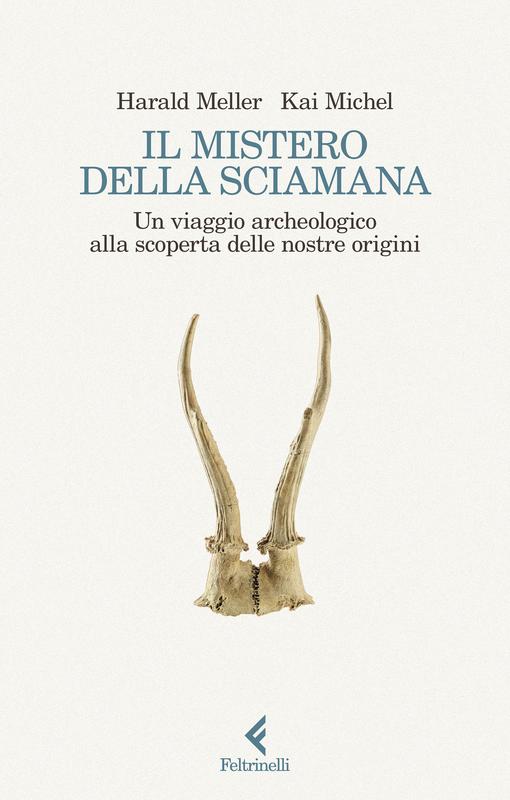
In June 2024, the Italian translation of a book by Harald Meller and Kai Michel, published two years earlier in Hamburg, was released. It is dedicated to reconstructing the story of a woman who lived 9,000 years ago and was buried near Leipzig in Bad Dürrenberg, a spa town in Germany. The Italian edition was reviewed by Fabio Genovesi in La Lettura del Corriere della Sera on Sunday, July 21, 2024, entitled La maga di pelle nera era l’antenata dei nazisti (The black-skinned sorceress was the ancestor of the Nazis). In my opinion, this title is misleading, even though the article highlights some of the main features of the book: because it cannot be said that this woman was either a sorceress or the ancestor of the Nazis.
The book is of great interest not only for the accuracy of the historiographical, historical-archaeological, and ethno-sociological reconstruction proposed by the authors, but above all because it opens a window onto the use of thermal mineral contexts in an era well before the Greek and Roman ages, namely during the transition period between the Mesolithic and Neolithic periods, and therefore in the fundamental phase that saw hunter-gatherers become settled peoples.
Spanning 366 pages, the volume is divided into 25 chapters with a final epilogue and an extensive thematic bibliography, offering the opportunity to explore the various areas of study covered in the chapters in greater depth. These range from the history of the tomb’s discovery to the initial interpretation of the find, accompanied by new perspectives linked to paleo-osteological and geo-environmental analyses, also considering the type of grave goods and examining other cases comparable to that of Bad Dürrenberg in Europe and around the world. This is therefore not a historical-archaeological essay, but an in-depth study that draws on various fields of research, allowing the reader to understand the steps taken in the research, the difficulties encountered, and the results achieved, as well as the prospects that can be envisaged from the output of the research itself.
On May 4, 1934, restoration work was underway on the accommodation facilities at the Bad Dürrenberg spa in the Saalekreis district of Saxony, with salt-rich waters and numerous mines. This location was one of Germany’s thermal mineral sites which, although already partially exploited in Roman times (see Cecilia Zanetti’s PhD thesis, Il Termalismo nelle Province Centrali. Rezia, Germania Superiore e Inferiore, University of Padua, discussion: January 31, 2017) and then in modern times, experienced a great increase in the early 20th century for therapeutic and tourist purposes. In fact, in Germany and Italy, as in other European countries, in the 1930s there were huge economic investments to redevelop thermal sites in order to transform them from simple treatment centers into wellness towns. They were frequented by wealthy landowners in search of alternative experiences, intellectuals and politicians eager for pleasant landscapes to inspire them to compose works of art or plan military campaigns, and real or fake patients hoping to be cured (see David Clay Large, L’Europa alle Terme. Una storia di intrighi, politica, arte e cura del corpo, EDT, Turin 2019 [The Grand Spas of Central Europe. A History of Intrigue, Politics, Art, and Healing, Rowman & Littlefield, Lanham-Maryland 2015]).
But Germany in the 1930s was under the leadership of Adolf Hitler and the Third Reich, founded on the premise of the superiority of the Aryan ‘race’ over other (equally non-existent) ‘races’: and so the discovery of the tomb in Bad Dürrenberg, containing the remains of an adult, a child, and a rich array of grave goods, was immediately interpreted as proof of an illustrious Aryan ancestor of the Germanic people, white-skinned and of undoubtedly indigenous descent. Quite the opposite, the burial was that of a dark-skinned woman with a baby a few months old in her arms, both belonging to a clan linked to groups of Mesolithic hunter-gatherers who migrated in search of environments favorable to survival and natural resources to exploit.
The location chosen for the burial was important: the tomb was placed on a hill above the Saale River with a view of the surrounding plain and near springs rich in salt deposits, which were also useful to animals that could go there to feed. The salt deposits were obviously also available to humans, as a dietary supplement, as well as the highly saline waters were, and still now, effective against inflammation and infections of internal organs (e.g., bronchi, lungs) and external organs (skin, limbs). Is it possible that the buried woman had learned to use these waters and their derivatives to heal the clan? And that, because of her abilities, the clan chose that particular place to give her such an exceptional burial? Archaeologists propose these hypotheses on the basis of various clues.
The skeleton belonged to a woman who was 1.55 m tall and died at around 35 years of age. Her female identity was confirmed by DNA analysis, which revealed that she had dark skin, dark hair, and light-colored eyes. The date of 7000 BC was established with certainty using C14 on the human and animal remains found. The skull had a malformation of the first cervical vertebra, which partially obstructed the blood supply to the brain when the woman turned her head to the side, causing temporary fainting spells. Therefore, a genetic anomaly could have been the basis for ‘eccentric’ behavior, such as trance states.
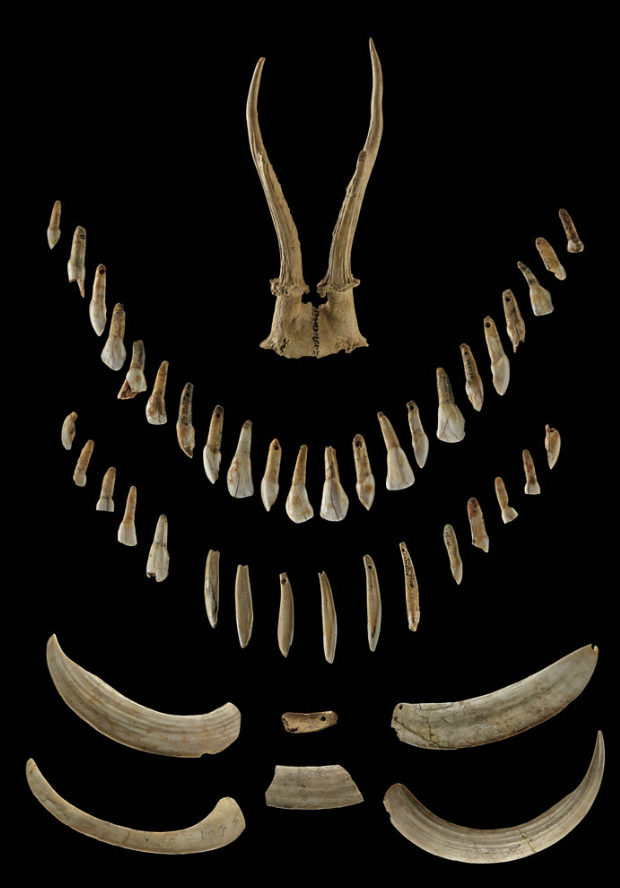
1 | Animal bones placed on top of the deceased’s body.
The deceased wore a headdress made of antlers and roe deer bones as well as animal teeth [Fig. 1], while other items were placed on the woman’s body and were originally perhaps attached to the leather covering some parts of it. The sumptuousness of the headdress and other objects indicate the woman’s very high rank within the clan, which is confirmed by the grave goods dedicated to her, consisting of 69 pieces of jewelry and 52 tools. Roe deer antlers, wild boar tusks, stone blades, shells, animal teeth, a crane bone containing 31 small flint tools, a perforated axe placed under her right arm, and fragments of the shells of three marsh turtles, which, as we shall see, may have been used as containers for particular substances.
In 1934, despite the hastiness of the excavation, parts of the body of a child were also recovered, placed almost in the woman’s arms, also with the genomic characteristics of hunter-gatherers: he had dark skin and light eyes but was not her son, perhaps a relative. A few fragments of the skull and some teeth were recovered, enough to confirm that he was less than a year old when he died. The shells of a small snail, Gyraulus, were probably dedicated to him. They were not noticed in 1934 but were recognized in an archaeological essay carried out in 2019 not far from the site of the discovery. Here, about 1 meter in front of the tomb of the woman and child, the horns and skull of a large deer were recovered, intentionally placed in front of the tomb a few years later, perhaps with the fur (a sort of garment referring to her status? The authors wonder): a sign that this place remained a point of reference or ‘pilgrimage’ for the people of the clan to which the woman was linked, who, in memory of her and what she had represented, performed ad hoc cult practices and rituals.
A final element is rightly highlighted in the volume, namely the fact that laboratory investigations have made it possible to understand that the woman, the child, and all the objects in the grave goods had been laid to rest in an almost oval-shaped pit, lined with a weave of willow branches, about 1.3 m deep; the walls were covered with a reddish layer, on which the bodies were placed. Once the burial ritual was complete, a layer of red ochre, or hematite, was spread over the bodies, which was then covered with wooden elements and earth.
Why was it so important to pay homage to this woman? Archaeologists believe that the deceased was considered a ‘special’ person, both because she had perhaps developed skills in practicing cures and treatments using water and other natural elements, and because, drawing strength from her congenital weakness, which was a malformation of the first vertebra of the brain, she sometimes exhibited unusual, peculiar behaviors: states of mental and physical alteration, such as apathy and trances, due to the temporary reduction of blood flow to the cerebellum, could have created the ideal conditions for developing an aura of respect and veneration typical of borderline figures such as atypical healers or shamans. It is precisely the headdress and the type of burial that represent the characteristic element of other examples of clothing typical of people similar to shamans. The latter, who for centuries were considered the stereotype of charlatans and sorcerers, were individuals, often female, capable of establishing contact with the natural world (i.e., the non-human world) through the intake of substances and the use of special tools with which they were able to heal illnesses or overcome moments of misfortune and individual and/or collective crises. The authors devote many pages of the book to presenting the history of studies on shamanism, with particular regard to research carried out in the second half of the 20th century, which demonstrated how these individuals possessed knowledge and wisdom that differed from orthodox and traditional beliefs: for this reason, they were opposed, repressed, and crushed, especially in Russia. By way of example, authors recall both the 18th-century policies of Peter the Great aimed at forcing shamans to convert to Christianity in order to eliminate the ‘priests of the devil’, and Soviet propaganda, which recognized Siberian shamans as enemies of the working class (see E. Kasten (ed.), Schamanen Sibiriens und ihr Vermächtnis 2021).
The Bad Dürrenberg burial is therefore rich in meaning and can be compared to other Mesolithic and Neolithic burials found elsewhere, which have also been interpreted as belonging to shamans. For example, the tomb of the so-called Horn Shelter Man, buried in Texas 11,000 years ago with a little girl, contained a bag with tools for crushing and mixing substances, such as medicines, stored in the turtle shells found there: this is demonstrated by the residues of hematite, i.e., red ochre, analyzed inside them (pp. 272-273). The Swedish tomb in Skateholm, dating back to around 5000 BC, must also have belonged to a healer: here were the remains of a woman buried with a deer antler and many other objects similar to those of the presumed shaman of Bad Dürrenberg (pp. 280-283).
The evidence presented by the authors in support of the hypothesis that the Bad Dürrenberg burial is not only exceptional in itself because it dates back 9000 years, but also because it is indicative of ancient medical knowledge, seems convincing. This is suggested by the type of grave goods and the ‘special’ headdress typical of those who occupied a prominent position in the clan; the burial of the woman (and child) in a grave lined with willow branches, from whose bark, as is well known, salicin is extracted – a natural principle with pain-relieving and fever-reducing properties, which is the basis of the composition of modern aspirin, or acetylsalicylic acid (pp. 305-306). This is further suggested by the shells of the three turtles, perhaps used as containers for mixing natural elements such as salt, salicin, and, last but not least, red ochre for therapeutic purposes. As highlighted in one of the articles in this issue (M. Cvetkovic), hematite was for millennia a compound of primary importance in medical practices, extracted from contexts near iron-rich mineral springs. Finally, although only circumstantial evidence, the medical knowledge of the so-called shaman of Bad Dürrenberg could be confirmed by the very place where she was buried, namely the salt springs. If there is no archaeological evidence to prove the presence of salt inside the tortoise shells and seashells in her grave goods (because, as is well known, salt is soluble in water and does not seem to have been preserved here), it cannot be ruled out that it was precisely through water and its derivatives, together with her knowledge of other natural principles, that this woman represented a fundamental point of reference for her group of humans.
So, this is a beautiful book, compelling and convincing. The only aspect on which one might have expected more depth is precisely the role of thermal mineral resources in this archaeological cold case: because, as recent studies show, the history of natural thermalism is not limited to the analysis of Roman-era healing stations, but begins much earlier, at least in the second half of the 2nd millennium BC with the first Mycenaean healing stove in Lipari, or rather with the trade in secondary products found around the springs and in the mines (data now proposed and commented on in M. Bassani, Adriatico salutifero, 1. Archeologia del termalismo al Fons Timavi e al Fons Aponi, Rome-Bristol 2025). In fact, the time frame of the archaeological investigation into thermalism could be much broader: already in Fritz Geschwendt’s book, Der vor- und fruhgeschichtliche Mensch und die Heilquellen, Hildesheim 1972, cited by the same authors (p. 76), prehistoric thermal mineral contexts in the Rhineland were analyzed, with objects used to exploit spring waters (e.g., logs transformed into pipes, pilings) and artifacts dedicated at the springs as ‘ex voto’. Other cases are known in Italy, as shown by the census published in 2014 (M. Annibaletto, M. Bassani, F. Ghedini (eds.), Cura, preghiera e benessere. Le stazioni termominerali nell’Italia romana, Padua 2014). Two particularly significant examples can be mentioned. The first is the Kronio Caves in Sciacca (AG), where hot thermal vapors connected to local geothermal energy have been exploited continuously to this day: several votive vessels dating from between 6000 and 3000 BC were deposited there as a form of thanksgiving for regained health (from M. Bassani, Adriatico salutifero 2025 cit., pp. 97-98, with bibliography). The second case is that of the Fonti Romane della Fratta near Bertinoro (Emilia-Romagna): nineteenth-century works aimed at modernizing the salsobromoiodic springs near the Salso River (therefore with chemical-physical characteristics similar to those of Bad Dürrenberg) discovered the existence of a prehistoric well containing a tree trunk used as a pipe, in which there were intact and fragmentary water vessels and containers with remains of fibers on the handles (ropes?) and residues of ocher and other food remains. Fruit, cereals, sheep and ox bones were also found in the well, while fragments of other tools typical of a settlement at the springs were recovered nearby (see M. Bassani, Per una carta distributiva degli spazi sacri alle fonti curative, in Annibaletto, Bassani, Ghedini 2014 cit., p. 181, with bibliography). Finally, in recent months near Grosseto, in the Terme di Sorano place, a prehistoric thermal place for healing and worship was discoverd by Authority for Archaeology.
I therefore believe that further studies on the context of Bad Dürrenberg and on thermalism in ancient times should further explore the role of mineral water and its secondary products in the dynamics of life and settlement, broadening the perspective and also considering traces on the European continent and in the Mediterranean area since prehistoric times. After all, simply observing the behavior of wild animals, which spontaneously go to thermal mineral springs to clean their fur of parasites or to roll in the mud to benefit from inflammation or wounds, may have represented the first cognitive interface between humans, animals, and thermalism.
In conclusion, the prehistoric woman of the Bad Dürrenberg thermal park was neither a sorceress nor an ancestor of the Nazis: she was probably a healer, capable of drawing benefits from natural resources for herself and others: she was the ancestor of all of us, sedentary descendants of dark-skinned migrants who moved freely in a Europe that was wilder but certainly more welcoming than today’s.
Abstract
This review examines the Italian edition of Il mistero della sciamana by Harald Meller and Kai Michel [Italian edition from the German edition Das Rätsel der Scamanin. Eine archäologische Reise zu unseren Anfängen, Rowohlt Verlag GmbH, Hamburg 2022], focusing on the Mesolithic burial of a woman discovered at the thermo-mineral site of Bad Dürrenberg. Combining archaeological, osteological and environmental data, the authors reinterpret a find long distorted by ideological readings, identifying the woman as a healer or shaman-like figure within a hunter-gatherer community. The rich grave goods, ritual practices and proximity to saline springs point to an early form of medical knowledge based on natural resources. While acknowledging the book’s methodological strength, the review calls for a broader integration of Bad Dürrenberg into the long-term history of prehistoric thermo-mineral practices.
keywords | Mesolithic burial; Shamanism and healing; Thermo-mineral landscapes; Prehistoric medicine; Archaeological reinterpretation.
Per citare questo articolo / To cite this article: Maddalena Bassani (a cura di), The origins of thermalism. A female burial from the thermal mineral site of Bad Dürrenberg, Review of: H. Meller, K. Michel, Il mistero della sciamana. Un viaggio archeologico alla scoperta delle nostre origini, [Das Rätsel der Scamanin. Eine archäologische Reise zu unseren Anfängen, Rowohlt Verlag GmbH, Hamburg 2022] Feltrinelli Editore, Milan 2024, “La Rivista di Engramma” n. 231, gennaio/febbraio 2026.